
Why Precision CNC Machining Matters for Aerospace and Turbine Components
Aerospace parts leave little room for error. Learn why precision CNC machining matters for turbine components, fixtures, tooling, and repair work.
Aerospace parts leave little room for error. Learn why precision CNC machining matters for turbine components, fixtures, tooling, and repair work.
Precision CNC machining matters in aerospace because small errors can create larger problems once a part moves into an assembly, repair, or turbine-related system. A component may look simple, but its dimensions, surface finish, material handling, and inspection record all affect whether it performs the way it should.
That is why aerospace machining is not just about cutting metal. It is about making parts that fit, repeat, inspect cleanly, and support the next step without creating rework.
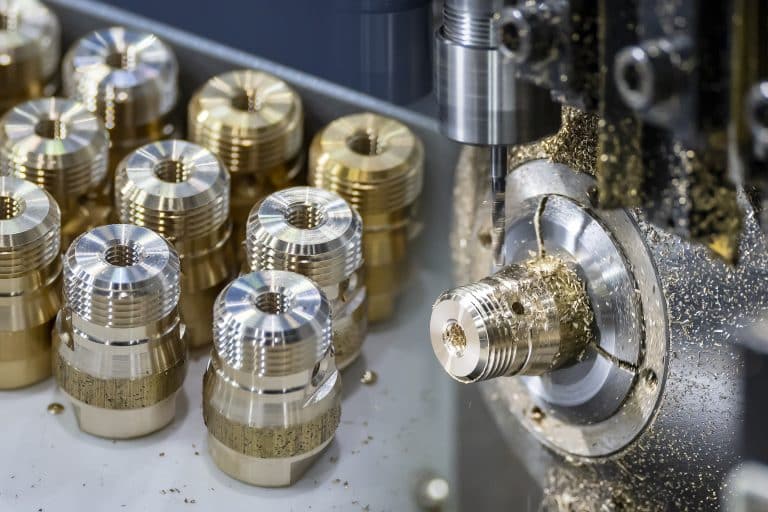
Aerospace and turbine components often work in demanding conditions. Heat, vibration, pressure, load, corrosion, and repeated use can all expose weak points in a part that was not made correctly.
That is where precision CNC machining earns its value.
A bracket, housing, fitting, fixture, or turbine-related component may pass a quick visual check and still be wrong where it matters. The hole location may be slightly off. A sealing surface may not be clean enough. A feature may not repeat from one part to the next. Those are the kinds of issues that slow down assembly, create inspection problems, or force the customer to start over.
For customers who need this kind of work, aerospace CNC machining services should be viewed as part of the larger manufacturing process, not a standalone shop task.
CNC machining uses computer-controlled equipment to mill, turn, drill, bore, and shape parts to exact requirements. In aerospace work, the value is not only that the machine can repeat a cut. The value is that the full process is controlled around the part.
That includes material selection, workholding, tool choice, cutting strategy, surface finish, inspection, and documentation.
Aerospace machining can support parts such as housings, brackets, supports, fittings, tooling, fixtures, repair-related components, and turbine hardware. Some parts are made from new material. Others support repair work or production needs. Some are simple. Others need several setups and close inspection before they are ready.
That is why machining belongs inside a broader aerospace manufacturing services platform. The part often needs more than one process before the job is complete.

People often talk about tight tolerances first, and that makes sense. But tight tolerance alone does not tell the whole story.
A part can meet one dimension and still fail the job if the surface finish is wrong, the material was handled poorly, the part moved during machining, or the wrong datum was used during inspection. Good machining is not one number on a print. It is the whole path from raw material to finished part.
Measurement is a serious part of that path. NIST’s dimensional metrology work supports high-accuracy length-based measurement and standards activity for high-value manufacturing fields, including aerospace and shipbuilding. In plain language, precision work depends on the ability to measure accurately and repeat that measurement with confidence.
That is the difference between “it looks right” and “we know where it stands.”

Aerospace materials are often selected for strength, weight, heat resistance, or corrosion resistance. They are not always selected because they are easy to machine.
Aluminum alloys are common in aerospace work and can machine efficiently, but they still require correct setup and handling. Titanium is valued for strength and weight, but it can be difficult to cut cleanly without heat and tool-life concerns. Stainless steels and nickel-based alloys may be used when corrosion, heat, or wear resistance matter.
Each material asks for a different approach.
That is why a shop cannot treat every aerospace part the same. Cutting strategy, speed, coolant, tool selection, and inspection all need to match the material and the job. The better the shop understands the material, the better chance the part has of coming out right the first time.
A CNC machine can only do its job if the part is held correctly.
Poor workholding can create movement, vibration, distortion, or inconsistent results from one setup to the next. That matters in aerospace work, where the relationship between features is often as important as the features themselves.
This is where custom tooling becomes part of the machining conversation. If a part needs special support, a holding fixture, or repeatable setup control, tool and equipment design can help the machining process start from a more stable place.
Good workholding does not usually get much attention when everything goes well. But when it goes wrong, everyone notices.
A machined surface does more than look clean.
Surface finish can affect fit, friction, coating readiness, inspection, sealing, fatigue behavior, and how the part interacts with other hardware. In turbine-related work, even a small surface issue can matter if the component is exposed to heat, airflow, vibration, or repeated handling.
That is why machining should be planned with the next step in mind. If the part will be inspected, welded, coated, cleaned, assembled, or delivered to a customer, the surface condition matters.
For many aerospace projects, machining connects naturally to NDT inspection services and finishing work. The cleaner the handoff between those steps, the fewer surprises later.

Inspection is not only a final checkpoint.
In a good machining process, inspection may happen during the job. Critical dimensions may need to be checked after roughing. A setup may need to be verified before the next operation. A surface may need to be inspected before coating or finishing.
This is especially true when the part is expensive, difficult to replace, or part of a larger repair process.
Aerospace customers do not want to find out at the end that a feature drifted out of tolerance early in the job. They want problems caught before the work goes too far.
Aerospace customers care about whether a shop can make the part. They also care about whether the shop can repeat the process.
The IAQG 9100 standard was developed for aviation, space, and defense organizations, and IAQG notes that it can also be used in sectors that need quality management requirements beyond ISO 9001. That speaks directly to why aerospace customers care so much about process control, documentation, and consistency.
A good aerospace machining partner should think this way even when a project does not require a formal aviation approval. The habits still matter: material control, dimensional checks, clean communication, and traceable work.
The part has to be right. The process has to be dependable too.

Turbine-related components often bring additional pressure to the job.
These parts may involve heat-resistant materials, sealing surfaces, close fits, airflow-related geometry, or wear concerns. Even support hardware around turbine systems can require careful machining because small fit or surface issues can create bigger headaches later.
That is why turbine-related machining should not be treated like ordinary shop work. The environment is tougher, the parts often carry higher value, and the cost of rework can be high.
For Great Lakes Aerospace & Machine, an Atlantic Jet Partners company, this is where machining, repair, inspection, coatings, and finishing all connect. A turbine-related component may need several of those services before the work is complete.
Although aerospace and turbine-related work are major areas of focus, precision CNC machining can also support select industrial applications.
Industrial customers may need machined tooling, equipment components, production support parts, or repair-related hardware that has to fit correctly and hold up in use. The application may be different, but the need is familiar: make the part accurately, check it properly, and prepare it for the next step.
That broader capability helps Great Lakes Aerospace & Machine support aerospace customers while also serving qualified industrial work that fits its manufacturing process.
A machining request often turns into more than machining.
The part may need a custom fixture. It may need inspection before repair. It may need welding after machining. It may need coating, cleaning, or finishing before delivery. When every step goes to a different vendor, the customer ends up managing the gaps.
That is one reason integrated manufacturing matters.
When machining, tool and equipment fabrication, NDT, coatings, repair, and finishing sit closer together, the job is easier to coordinate. Not every project needs every service, but having those options can save time when the work becomes more involved.
Precision CNC machining matters because it protects the rest of the job.
It helps the part fit. It supports repeatability. It gives inspection something real to verify. It helps coatings, welds, assemblies, and downstream processes start from a better place. It also gives the customer more confidence that the part will work the way it was intended to work.
For aerospace and turbine-related components, that is the difference between a part that is merely cut and a part that is truly ready for the next step.

Aerospace CNC machining is the precision machining of components used in aircraft, turbine, and aerospace-related applications. These parts often require close dimensional control, careful material handling, inspection, and repeatable results.
Precision matters because aerospace components often fit into larger systems where small errors can affect assembly, inspection, surface condition, or performance. The part has to be made correctly and checked carefully.
Common aerospace machining materials may include aluminum alloys, titanium alloys, stainless steels, nickel-based alloys, and other materials selected for strength, heat resistance, corrosion resistance, or weight considerations.
No. Aerospace and turbine-related work are major areas of focus, but precision CNC machining can also support select industrial parts, tooling, equipment components, and production support hardware.
If your project involves aerospace CNC machining, turbine-related components, precision parts, tooling, or manufacturing support, Great Lakes Aerospace & Machine can help you look at the job and decide the next step.
Start with our aerospace CNC machining services page, or explore the broader Great Lakes Aerospace & Machine aerospace manufacturing services platform to see how machining fits into the full service stack.