Atlantic Jet Partners

How FAA-Approved PMA Parts Are Changing the Economics of Aircraft Maintenance

Discover how FAA-approved PMA parts deliver cost savings, faster availability, and airworthiness confidence. Learn what operators should look for and why Aerospace Design & Compliance leads the way.

Table of Contents
    Add a header to begin generating the table of contents

    Aircraft maintenance used to be simple: you called the OEM, paid whatever they asked, and waited for the part. That model is breaking. FAA-approved PMA parts now give operators, MROs, and fleet managers a way to control cost, protect schedule, and keep aircraft in service without sacrificing airworthiness. 

    In many cases, the savings can reach 20 to 50 percent compared to OEM pricing, and parts are available sooner, not months from now. This shift isn’t theoretical. It is already influencing how flight departments build budgets and how maintenance leaders keep airplanes moving.

    This article explains what PMA really is, how the FAA approves it, why more operators are adopting it, and what to look for in a PMA supplier you can trust.

    What Exactly Is a PMA Part?

    PMA Parts

    FAA definition in plain English

    A PMA part is an aircraft part the FAA has approved for both design and production. In other words, it is a part the FAA has accepted as airworthy for installation on a specific certificated product, such as an aircraft, engine, or propeller.

    This is important: a PMA part is not a “cheap copy.” 

    It is not a guess. It is a controlled, inspected, documented article that has gone through a defined FAA approval path.

    PMA vs OEM is not “cheap vs safe”

    OEM parts are built and sold by the original equipment manufacturer. PMA parts are built by an FAA-approved source outside the OEM and are still legal to install, provided documentation and eligibility are correct. 

    Many PMA components are approved specifically because they meet the same performance and safety standards as the OEM equivalent. In some fleets, operators have reported 30 to 50 percent cost savings when they switch certain line items from OEM to FAA-approved PMA, without any loss of reliability or airworthiness.

    For operators and MROs, that’s a big deal. Lower acquisition cost per part goes straight to the maintenance line of the P&L. Faster access to parts keeps aircraft off the ground and in revenue-producing service.

    Why this matters to flight operations

    When you are running charter, corporate flight, regional lift, or any mission with tight dispatch requirements, waiting on an OEM backlog can mean an AOG that lasts days instead of hours. After the pandemic, operators became much less tolerant of grounded aircraft caused by parts availability. Many began using PMA sourcing strategies to reduce exposure to OEM bottlenecks and restore schedule control.

    How the FAA Approves a PMA Part

    Two approvals, not one

    The FAA looks at a PMA part from two angles.

    First, the design itself has to satisfy airworthiness requirements. The applicant must prove that the part, when installed, will perform safely and predictably in the environment and system for which it is intended. That is the design approval side of PMA.

    Second, the production system has to prove it can build that same part consistently, repeatedly, and with full traceability. This is the production approval side, which falls under Part 21 Subpart K. 

    It requires documented manufacturing controls, inspections, conformity checks, and recordkeeping so the FAA knows you are not just getting one good part. You are getting a reliable source of identical good parts over time.

    If both halves meet FAA expectations, the result is Parts Manufacturer Approval. That approval covers both: the “what” (design) and the “how” (repeatable build process).

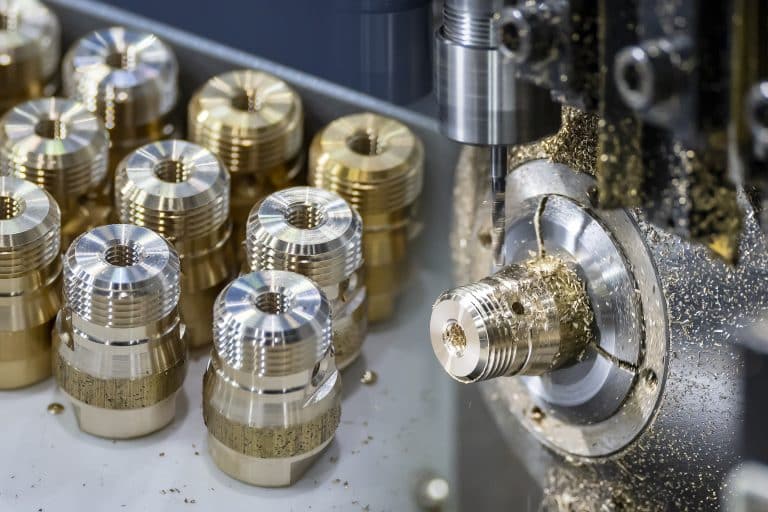
    Metal working

    How the applicant proves it

    There are several accepted paths to convince the FAA. A PMA applicant can run qualification tests and engineering analysis. They can demonstrate that the new part is materially and functionally identical to an already approved design. In some cases the applicant may even work from licensed data. All of these paths are recognized certification methods.

    This matters to buyers because PMA is not guesswork. It is engineering plus documented proof.

    Airworthiness paperwork and why you should care

    When a part is released, it should carry proper documentation. One of the most important documents in this process is the FAA Form 8130-3 Authorized Release Certificate. That form provides traceability, identifies the airworthiness approval status of the article, and is relied on for installation eligibility, export, and maintenance records.

    If you are the Director of Maintenance, Director of Operations, or accountable manager signing off logbooks, having FAA Form 8130-3 attached to a PMA part makes compliance much cleaner later.

    See how Aerospace Design & Compliance supports design approval, production approval, and delivery under one roof.

    Why PMA Parts Are Gaining Adoption Fast

    Cost pressure is permanent

    Budgets are not getting looser. Fuel, crew, insurance, training, hangar, and compliance costs keep rising. 

    Maintenance leaders are expected to find savings that do not put safety at risk. 

    FAA-approved PMA is one of the few levers left that actually moves that needle in a measurable way. 

    Savings in the 20 to 50 percent range on some items are not marketing fluff. 

    They are now widely documented across multiple fleets, especially on high-volume or high-consumption parts.

    Supply chain control means uptime

    There is also a timing story here. OEMs are known to prioritize new production lines and larger airline contracts. Legacy platforms, charter aircraft, regional fleets, and aging airframes do not always get first call on spares. That delay becomes your problem when you are sitting on an aircraft that cannot legally dispatch.

    PMA gives you an alternate path. Instead of waiting in an OEM queue, you can source an FAA-approved part from a Production Approval Holder that already has the certification, already has the manufacturing cell, and can deliver on a reliable schedule.

    The downtime math

    Every hour an aircraft sits is an hour it cannot generate value. That might be charter revenue. It might be internal corporate mobility. It might be regional service fulfillment. Whatever it is, it is lost. PMA is increasingly being used not just to save money per part, but to save the mission itself from slipping.

    What To Look For in a PMA Supplier

    Vertical integration matters

    On paper, a lot of suppliers can say “We offer PMA parts.” In practice, what you want is a supplier that does more than just broker or source. 

    The strongest partners design, certify, build, and support the part inside one coordinated system instead of scattering those functions across multiple subcontractors. 

    When engineering, manufacturing, and certification teams sit under the same roof, you avoid the classic delays where everyone blames the next vendor for a holdup.

    That model also tightens revision control and documentation discipline, which protects you during audits.

    PMA Parts Florida

    In-house ODA authority

    If a PMA supplier can perform certain FAA functions internally under Organization Designation Authorization, certification moves faster. An internal ODA team can review data packages, support approval steps, and push programs forward without waiting in external queues. That speed advantage is real for operators facing deadlines and entry-into-service milestones, and it is one reason ODA-backed suppliers are seen as strategic partners, not just parts vendors.

    Production Approval Holder status

    Ask if the supplier is actually a Production Approval Holder under Part 21 Subpart K. A PAH is accountable for manufacturing controls, inspection processes, release documentation, and airworthiness traceability.

    If they are not a PAH, they might still be reselling parts made somewhere else. That creates risk for you if there is ever a question about conformity.

    Simple rule: you want the company that built the part, documented the part, and can stand behind the part.

    PMA, Airworthiness, and Safety

    Is it really safe?

    One of the biggest myths around PMA is that it is somehow “less safe” than OEM.

    The FAA does not treat it that way.

    PMA parts are airworthy articles that have already been evaluated against FAA safety and performance standards for the installation in question.

    From a regulatory perspective, if the part is FAA-approved for that aircraft and correctly documented, no extra technical blessing from the OEM is required.

    Paperwork is protection

    The other half of safety is traceability. Proper paperwork, including FAA Form 8130-3 Authorized Release Certificate, gives you proof of status, configuration, and eligibility.

    That protects your maintenance records, your internal compliance posture, your future audits, and even resale value.

    When you can show a clean chain of airworthiness, you do not just “have a part.” You have a record.

    The Bottom Line for Operators, MROs, and Fleet Managers

    Where the industry is heading

    The industry is moving toward FAA-approved PMA sourcing because the old model is no longer sustainable. 

    Between cost pressure, aging fleets that OEMs no longer prioritize, and the expectation of near-zero downtime, operators are demanding parts that are legal to install, properly documented, and available on a practical timeline. 

    PMA gives them that.

    At the same time, the FAA has made it clear through the PMA process that safety, conformity, and traceability are not optional. 

    They are built into the approval path.

    How to act on this

    If you manage maintenance, own the dispatch reliability number, or carry the AOG phone, you should be asking one question: do I have a PMA source I trust. The right partner is not just a catalog. The right partner helps you get from design concept to certified, installation-ready hardware, backed by FAA documentation.

    Frequently Asked Questions About PMA Parts

    Yes. PMA parts are FAA-approved under Part 21 Subpart K and considered airworthy for eligible installations when released with proper documentation.

    No, not when sourced from an approved PMA manufacturer. The FAA requires proof of design integrity and proof of repeatable production quality. That is why PMA exists in the first place.

    Depending on the part category, the savings versus OEM pricing can reach into the double digits and in some cases 30 to 50 percent.
    For high-utilization aircraft, that is the difference between “we can hold this airplane another year” and “we have to park it.”

    No. PMA parts are widely used across business aviation, charter operations, corporate flight departments, regional fleets, cargo, and defense support programs.
    If you fly it, maintain it, or depend on it for dispatch, PMA is relevant.

    Contact PMA Parts

    Name
    Scroll to Top